A slower property market changes the value of every enquiry.
When homes are selling quickly, another buyer may be just around the corner. When demand is less certain, losing a genuine caller because the office was busy or closed is much harder to shrug off.
The latest signals are mixed, but they point towards a more demanding market. In its July 2026 report, the Bank of England said mortgage approvals for house purchases fell by nearly 15% in May and were broadly flat in June. The Office for National Statistics also reported that annual UK house price growth slowed to 2.7% in May, down from 3.9% in April.
That does not mean people have stopped moving. It means agents may need to work harder for each instruction, viewing and completed deal.
An AI receptionist for estate agents can help by making sure useful calls become organised next steps, even when negotiators are in viewings, speaking to vendors or away from the office.
Why an AI receptionist for estate agents matters now
Property enquiries rarely arrive at a convenient moment.
A buyer sees a listing after dinner. A tenant calls during their lunch break. A homeowner starts thinking about a valuation on Sunday morning.
If the call reaches voicemail, they may leave a message. They may also contact the next agent.
The job of an AI receptionist is not to replace an experienced negotiator. It is to make sure the opportunity is captured properly and reaches the right person with useful context.
It can answer immediately, identify the property or service the caller wants and agree a clear next step.
Not every property enquiry is the same
A generic message does not tell your team enough. Good call handling recognises the type of enquiry and follows the right path.
Buyer and tenant enquiries
The agent can identify the property, capture the caller's requirements and offer approved viewing times. It can also note useful details such as moving timescale and whether the caller has a property to sell.
Vendor and landlord leads
A valuation enquiry needs different questions. The agent might capture the address, property type, reason for moving and preferred time for an appraisal call.
Existing clients and active transactions
Chain updates, offer discussions and sensitive problems often need a person. The receptionist should recognise that and arrange the right handover instead of forcing the caller through a generic script.
From missed call to booked viewing
A useful viewing workflow could look like this:
- The caller gives the property address or listing reference
- The AI receptionist confirms which property they mean
- It asks a short set of agency-approved qualification questions
- It checks the viewing diary or captures suitable times
- It creates or updates the contact in the agency CRM
- It sends the caller an agreed confirmation
- It assigns the enquiry to the correct negotiator
- It alerts the team if any part of the handover fails
By the time the negotiator opens the record, they should know who called, which property they want and what needs to happen next.
That is much more useful than a recording labelled “new voicemail”.
Fast does not mean pushy
Property callers do not want an interrogation.
The first conversation should collect only what the team needs to help them. For a viewing enquiry, that might include:
- The property they are interested in
- Whether they want to buy or rent
- Their preferred viewing times
- Their broad moving timescale
- The best number or email address for confirmation
- Whether they also need a valuation
The questions should be agreed by the agency, tested on real calls and kept short.
The goal is not to collect everything. It is to capture enough information for a helpful next step.
Give the agent approved facts, not permission to guess
A property voice agent needs a reliable source of information.
That could be the agency's property database, an approved knowledge base or carefully controlled data from the CRM. The agent should only answer from information that the business trusts.
This matters because estate agents have responsibilities around the information given to potential buyers. In June 2026, the government published its response on improving material information in property listings, noting that problems often emerge when buyers and professionals cannot access the right information at the right time.
An AI receptionist should never invent an answer about tenure, service charges, council tax, property condition or availability. If the approved information is missing or unclear, it should say so and arrange a human follow-up.
Connect the call to the tools your agency uses
Answering the call is only the first half of the job.
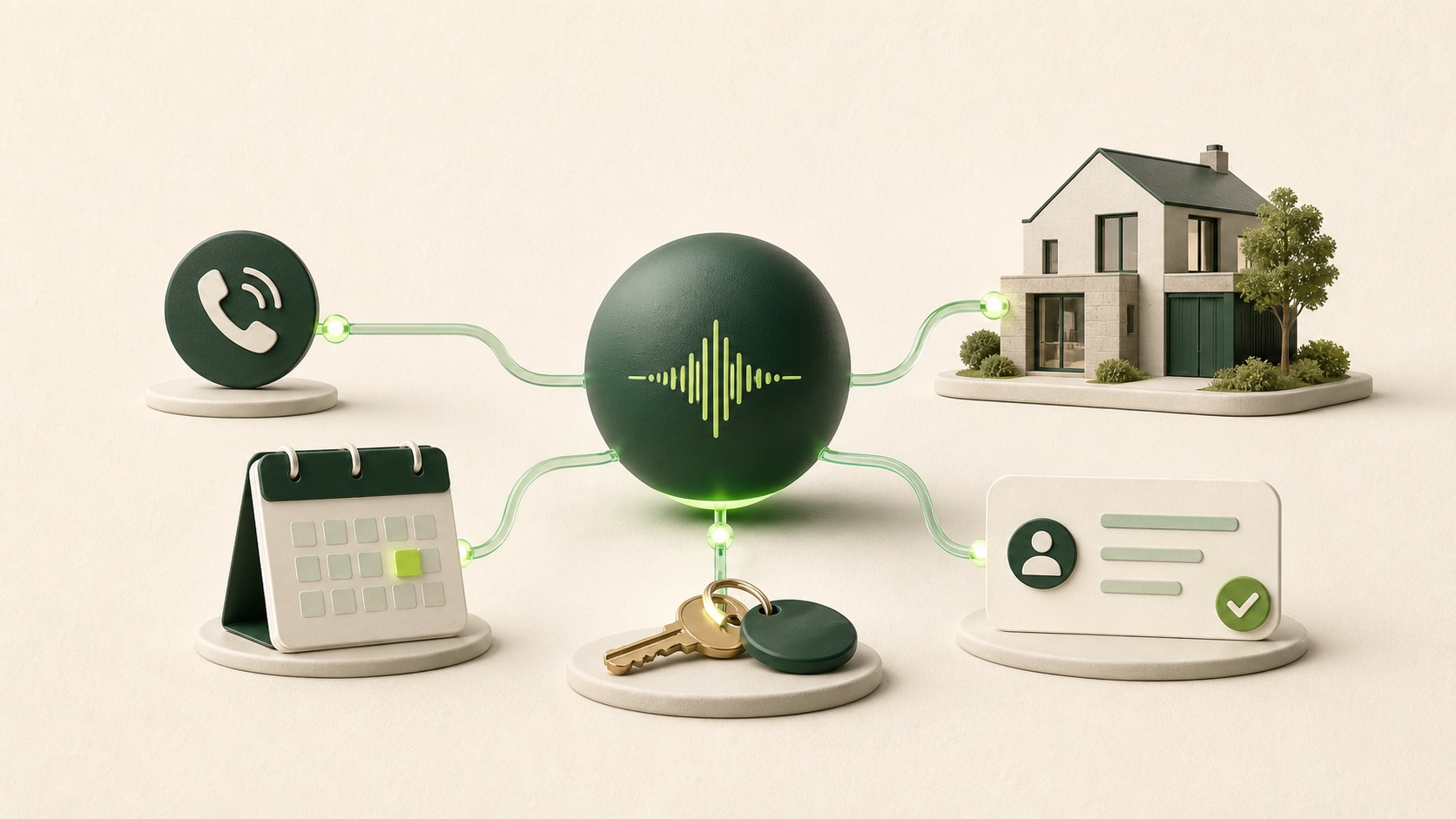
The result should appear in the same systems your team already checks. A well-designed setup might connect to:
- The agency CRM for contacts, notes and lead ownership
- The property database for approved listing details
- The viewing calendar for available times
- Email or SMS for confirmations
- Team notifications for urgent or valuable enquiries
Our guide to AI receptionist CRM integration explains how to turn a conversation into a visible and owned next action.
An isolated transcript creates more admin. A connected workflow removes it.
Keep humans in the important moments
Some parts of agency work need judgement, negotiation or reassurance.
For example, buyers can make offers verbally over the phone, and an estate agent must inform the seller of offers received. A voice agent might capture the caller's details and alert the negotiator, but it should not negotiate, imply acceptance or make promises on the seller's behalf.
Human handover should also be clear for:
- Complaints and emotionally difficult calls
- Offer discussions and negotiations
- Legal or financial questions
- Complex chain updates
- Urgent safety, access or maintenance problems
- Anything outside the agent's approved knowledge
A good AI receptionist knows its boundary. That makes it safer and more useful.
Measure outcomes, not how clever it sounds
The value of an AI receptionist should show up in the agency's numbers.
Track practical measures such as:
- Calls answered outside office hours
- Buyer, tenant and valuation enquiries captured
- Viewings requested or booked
- Time from first call to negotiator follow-up
- Enquiries added correctly to the CRM
- Calls handed to a person successfully
- Failed bookings or CRM updates
Listen to real calls as well. Numbers tell you what happened. Conversations tell you why.
Start with one enquiry type
Do not try to automate the whole agency on day one.
Start with a clear workflow such as out-of-hours viewing enquiries or valuation requests. Agree the questions, the data fields, the diary rules and the human handover.
Then test it with real scenarios and improve it from real call evidence.
In a slower market, the advantage is not having the most complicated AI. It is being the agency that gives every serious caller a useful response.
Want to see what an AI receptionist could handle for your agency?
Book a free voice AI audit. We will map your property enquiries, viewing workflow and follow-up process to find the calls worth capturing first.
Request your free audit ↗